
Lessons From a Failed Negotiation
November 24, 2026
Welcome to The Sidekick, a monthly procurement newsletter dedicated to Sourcing Heroes around the country.
Una is a group purchasing organization that helps over 10,000 active members save more money and simplify procurement.
Join us today at www.una.com.
What Can We Learn From the COP31 Failure?
Turning lessons into a sharper approach.
Welcome to edition #35 of The Sidekick!
A deal is only worth signing if it beats your alternative, but sometimes the strongest move at the table is to leave it. This month a very public negotiation ran more than 50 hours past its deadline and still ended without an agreement. It gave us a rare chance to watch a deal jam in real time, with near-impossible conditions that gave every party a veto.
This issue focuses on turning those lessons into a sharper approach for your next supplier negotiation.
We unpack how to read the room before you walk into it, then make the case for why walking away is sometimes the best-possible outcome. We also share data from our survey of 60 procurement leaders on how much indirect spend is going unmanaged, and flag the ProcureTech100 reveal on December 8 for your calendar.
Subscribe below so you never miss an issue!
Let's get into Issue #35...
The Indirect Spend Playbook: Accelerating Speed-to-Savings
Prioritizing indirect spend categories, overcoming decision paralysis, and accelerating speed-to-savings through group purchasing power.

Lessons From a Failed Negotiation
And how to develop a sharper approach next time.
On November 22, the COP31 summit in Antalya ended with no overarching agreement after running more than 50 hours past its scheduled finish. We'll leave the climate politics to the journalists, because the more useful thing for anyone who negotiates for a living is the machinery on display.
Failures this public are rare. They show how a negotiation jams in a way that confidential supplier talks never will.
COP31 will become a case study on how deals fail: the conditions meant that even a single holdout could block consensus, and the positions that sank it were visible long before the final session.
Check Whether Your Goalpost Needs Everyone to Agree
The COP31 agreement needed consensus from almost 200 parties. Any goal that requires a unanimous yes can be ended by a single holdout, so it's worth asking at the start whether you've defined success that way.
Procurement teams build the same trap on a smaller scale all the time, whether it's a sourcing decision that needs sign-off from finance, legal, IT and several business unit heads, or a consortium deal that only works if every member accepts identical terms. The fix is to agree the tiers of success before you start: the floor you can live with and the target you're aiming for, so that a partial result still counts as progress.
Even in Antalya, a large group of countries signed a separate pledge to ramp up electrification, which is the equivalent of locking in volume tiers now and parking the pricing formula for later.
Read the Room Before You Walk Into It
None of the positions that sank the deal were a surprise. Countries (dubbed “petrostates”) with heavy oil revenue have opposed even the mention of fossil fuels for years, while around 130 countries had backed a letter calling for it. When both camps have planted their flags so publicly before the first session, extra hours at the end rarely move anyone.
The procurement version is a supplier that has refused the same clause in each of its last three contracts: it won't accept it this time simply because you booked a nicer meeting room. The homework for procurement is knowing what the other side pushed for last time and who actually decides on their side, and once a position has hardened, your job is to find out whether anything behind it can still move.
Watch for the Sticking Point
Journalists at COP31 described the sticking point as coming down to just two words. That pattern is common in a long negotiation: a short phrase becomes the symbol for everything each side feels it has already given up, and the argument over wording stands in for a much larger argument nobody is having out loud.
Supplier talks can do the same thing with a liability cap or an auto-renewal term that carries far more emotional weight than its dollar value. When a clause becomes symbolic, work out what it represents for the other side and look for another way to deliver that, because redrafting the same sentence for the fifth time won't fix it.
Walking Away is Sometimes the Best-Possible Outcome
The EU, the UK and climate-vulnerable nations rejected the agreement because they felt having no agreement was a better outcome than a weak or meaningless one. Whatever you think of their stance, how the rejection happened is instructive. Those parties had stated their requirement well before the text arrived, so saying “no” was consistent and predictable.
A walk-away that has been signaled in advance is a position the other side can plan around, while one that appears from nowhere in the final hour tends to be read as theatre.
Procurement teams often treat no deal as a mark against their record. This is how weak agreements get signed. A deal nobody believes in has costs that arrive later, such as a three-year lock-in at the wrong rate and a stakeholder group that trusts your next recommendation a little less. A clean “no”, a handshake and a fresh start next quarter is sometimes the best result on the table, but it only works if you decided your walk-away point before the pressure arrived.
So before your next negotiation, ask four things:
- Does success depend on everyone agreeing?
- Where have the other side's positions already hardened?
- Which clause is most likely to turn symbolic?
- At what point would you leave?

Survey Says?
What 60 procurement leaders told us about indirect spend.
Art of Procurement surveyed 60 procurement and business leaders on Una’s behalf, asking how much of their indirect spend they believe is unmanaged or under-optimized.
The headline is hard to ignore:
- 84% estimate that more than 10% of their indirect spend falls into that bucket
- 52% put it above a quarter, and
- 16% say it's more than half.
The gap grows with spend. Among organizations putting $25M or more a year through indirect categories, 61% say over a quarter is unmanaged, against 29% of smaller spenders, and 22% of the bigger group put it above 50%.
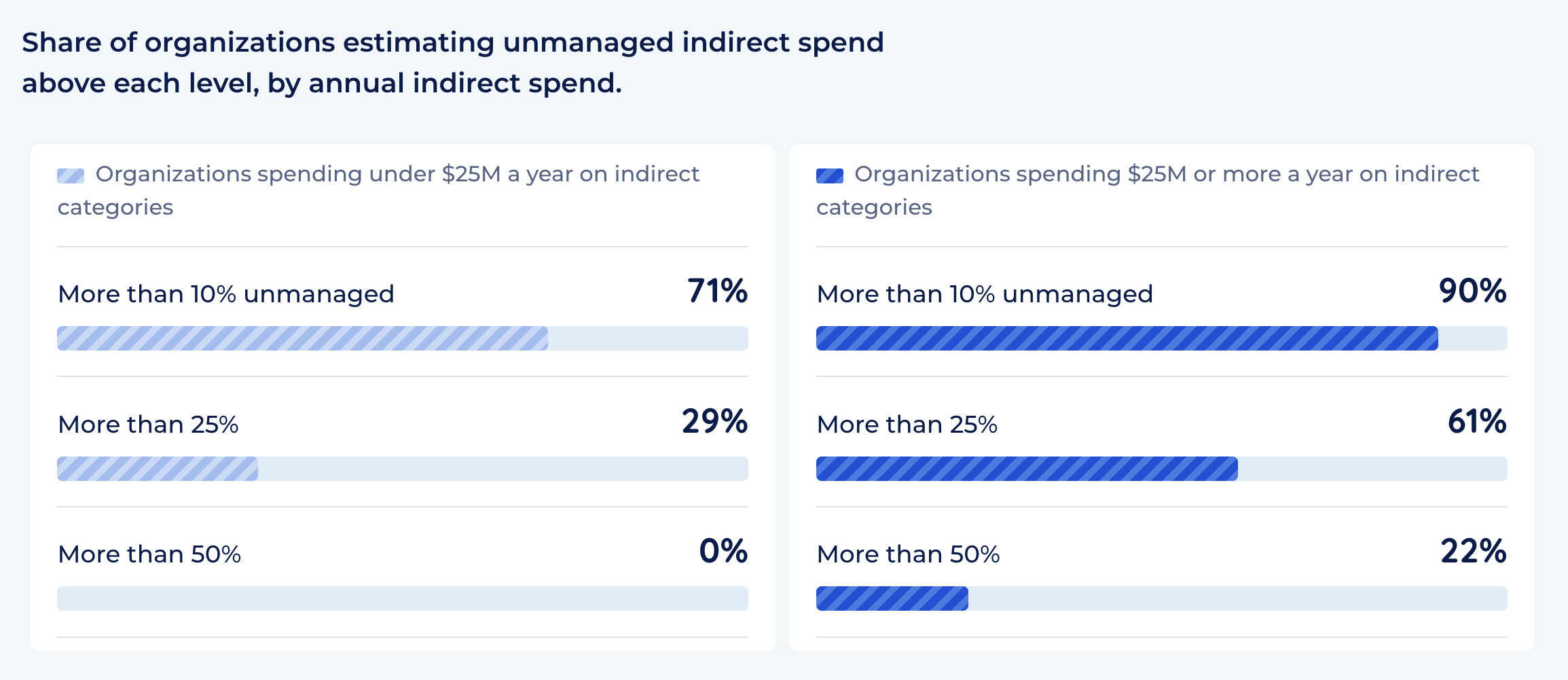
Scale doesn't seem to bring control. More categories, more business units and a longer tail appear to outrun whatever capacity the team has.
We asked what buyers want from a GPO. Predictably, savings dominate: 96% rank cost savings in their top three benefits and 81% rank it first, ahead of spend visibility (67%) and supplier benchmarking (60%).
62% already work with at least one GPO, and 68% of those work with two or more, which suggests buyers build GPOs into a portfolio over time. Among the 38% with no GPO, bandwidth is the most common reason spend goes unmanaged (62%), followed by a lack of visibility and no internal mandate (38% each), while only 14% point to budget.
Find the full results here.
🤖 AI Procurement News
Artificial intelligence shaping the industry.
Mark your calendars for the ProcureTech100 reveal on December 8th: Art of Procurement will reveal its 2027 list of 100 procurement technology providers that day, alongside the ProcureTech100 Yearbook.
It's worth watching because building a shortlist in this market is hard: the vocabulary has converged, so vendors increasingly sound alike. The judges are CPOs, heads of digital procurement and other practitioners who have implemented these tools, and there is no cost to be considered and no paid placement.
This year's rebuild adds a ten-category taxonomy, an established or emerging tag, and required customer references, so inclusion should carry more weight than before. Last year's announcement was a live webinar, so keep an eye on AOP's channels for registration details.
💫 Resources from Una
- Case Study: Premier Workspaces: Simplifying Procurement With Group Purchasing
- Playbook: The Indirect Spend Playbook: Prioritizing Categories & Accelerating Speed-to-Savings
- Guide: Procurement's Guide to Controlling Indirect Spend
- Article: Building an AI Foundation, Not Just an AI Stack
- Article: How to Build a Real BATNA Before You Need One
- Podcast: Episode 250 Featuring Scott Levens
- Podcast: Episode 251 Featuring Alex Tassini-Negri
📧 Never Miss an Issue
Subscribe to The Sidekick.
Subscribe to receive The Sidekick in your inbox. New issues are published every month.