
The Beef Crisis, Shadow Fleets, and the Drone Procurement Gap
June 23, 2026
Welcome to The Sidekick, a monthly procurement newsletter dedicated to Sourcing Heroes around the country.
Una is a group purchasing organization that helps over 10,000 active members save more money and simplify procurement.
Join us today at www.una.com.
The Beef Crisis
Plus shadow fleets and the drone procurement gap.
Welcome to edition #30 of The Sidekick!
The U.S. cattle herd is the smallest it has been in 75 years, and the forces now pressing on beef prices have nothing to do with grilling season. We break down the supply crisis, the disease outbreak, and the trade talks that could make everything worse.
We're also covering shadow fleets, the procurement of drones that are upending the military status quo, and the moment a government shut off one of the world's most capable AI models in under two hours.
Subscribe below so you never miss an issue!
Let's get into Issue #030...
The Indirect Spend Audit: Finding & Arresting Margin Leakage
Una's playbook for uncovering hidden costs, securing unmanaged spend, and maximizing operational margins through an audit-based procurement framework.

The Perfect Storm Hitting Beef Procurement
A shrinking herd, parasites, and a trade deal on edge.
It is summer grilling season, but for a growing number of American households and the foodservice operations that serve them, beef is no longer a given at the table.
The cost of ground beef has climbed more than 20% since January 2025 alone due to three separate pressures converging at once.
Procurement teams in food, hospitality, healthcare, and any category that touches protein need to understand all three.
- 75-year low for U.S. cattle herd sizes as of January 2026
- $6.69 average price per pound of ground beef
- 80%+ drop in young cattle imports from Mexico in 2026
Structural Herd Problems
The U.S. cattle herd now stands at roughly 86.2 million head, a low not seen since 1951. Years of persistent drought across the West and the Great Plains forced ranchers to sell off breeding stock rather than hold animals through feed shortages.
High interest rates compounded the problem. Holding a young heifer for future breeding requires capital, and when the return on selling her for slaughter is immediate and the cost of financing is high, the math pushes toward liquidation. The result is that the industry has been drawing down its breeding population for several years running, and the 2025 calf crop was the smallest since 1941.
Rebuilding a cattle herd is not a quick process. It takes years for a heifer retained today to produce calves that reach slaughter weight. Most analysts place any meaningful supply recovery no earlier than 2028.
Between now and then, there are simply fewer cattle to process, which means fewer pounds of beef available at any price point, and relentless upward pressure on the price per pound.
The arithmetic is brutal for processors. Fewer cattle means higher input costs for live animals, lower slaughter volumes, and squeezed margins throughout the chain. Some processing capacity has already closed permanently, which tightens the bottleneck further.
For buyers further down the chain, it means the price signals they are seeing now reflect where supply will remain for the next two to three years at minimum.
Screwworm Outbreak
Layered on top of the structural herd shortage is a disease that has cut off one of the industry's key safety valves.
The New World screwworm, a parasitic fly whose larvae burrow into living tissue, hit cattle populations in Mexico and has now crossed into south Texas and New Mexico. The U.S. border was closed to live cattle imports from Mexico in mid-2025 as a containment measure, but the outbreak has shown no sign of retreating.
This matters enormously to the beef supply chain because North American cattle markets are deeply integrated. The U.S. has long relied on young feeder cattle imported from Mexico to be fattened for slaughter in American feedlots, as well as mature fed cattle from Canada.
In 2025, live cattle imports fell by more than half compared to the prior year. In 2026, young cattle imports from Mexico have collapsed by more than 80%. Canada, responding to the screwworm's spread into the southern U.S., has imposed bans on live cattle from the affected regions, adding another layer of supply disruption.
The screwworm outbreak has effectively removed a buffer that the industry would otherwise lean on heavily during a period of domestic herd contraction. At the precise moment American ranchers have fewer animals to sell, the usual channel for supplementing domestic supply has been shut down by a parasite.
Trade Deal Wildcard
The third pressure is the one with the most uncertain outcome, and potentially the highest stakes.
The trade agreement that binds the U.S., Canada, and Mexico, the framework that enabled seamless cross-border movement of cattle and beef products, is again up for review. All three countries face a formal decision by July 1, 2026, on whether to extend the deal for another 16 years or let it revert to annual reviews until its full expiration in 2036.
True to his negotiation playbook, Trump has warned publicly that the U.S. may not renew the agreement and could withdraw from it entirely. Canada, whose relationship with the current administration is strained, has so far declined to participate in the talks at all. U.S. and Mexican negotiators have been meeting to discuss the terms, with the beef sector among the central items on the table.
The integrated nature of North American beef production means any disruption to the trade framework would ripple immediately through prices, supply, and processing decisions. Beef is simultaneously one of the largest agricultural imports and one of the largest agricultural exports for the United States.
A breakdown in trade relations, or even prolonged uncertainty about what the framework will look like, creates planning risk for every organization that sources beef at scale.
What This Means for Your Procurement Team
The combination of a structural herd shortage, a border-closing disease outbreak, and a trade deal in flux represents exactly the kind of multi-vector supply risk that procurement functions exist to manage.
The window for taking proactive steps is now, before any one of these factors deteriorates further.
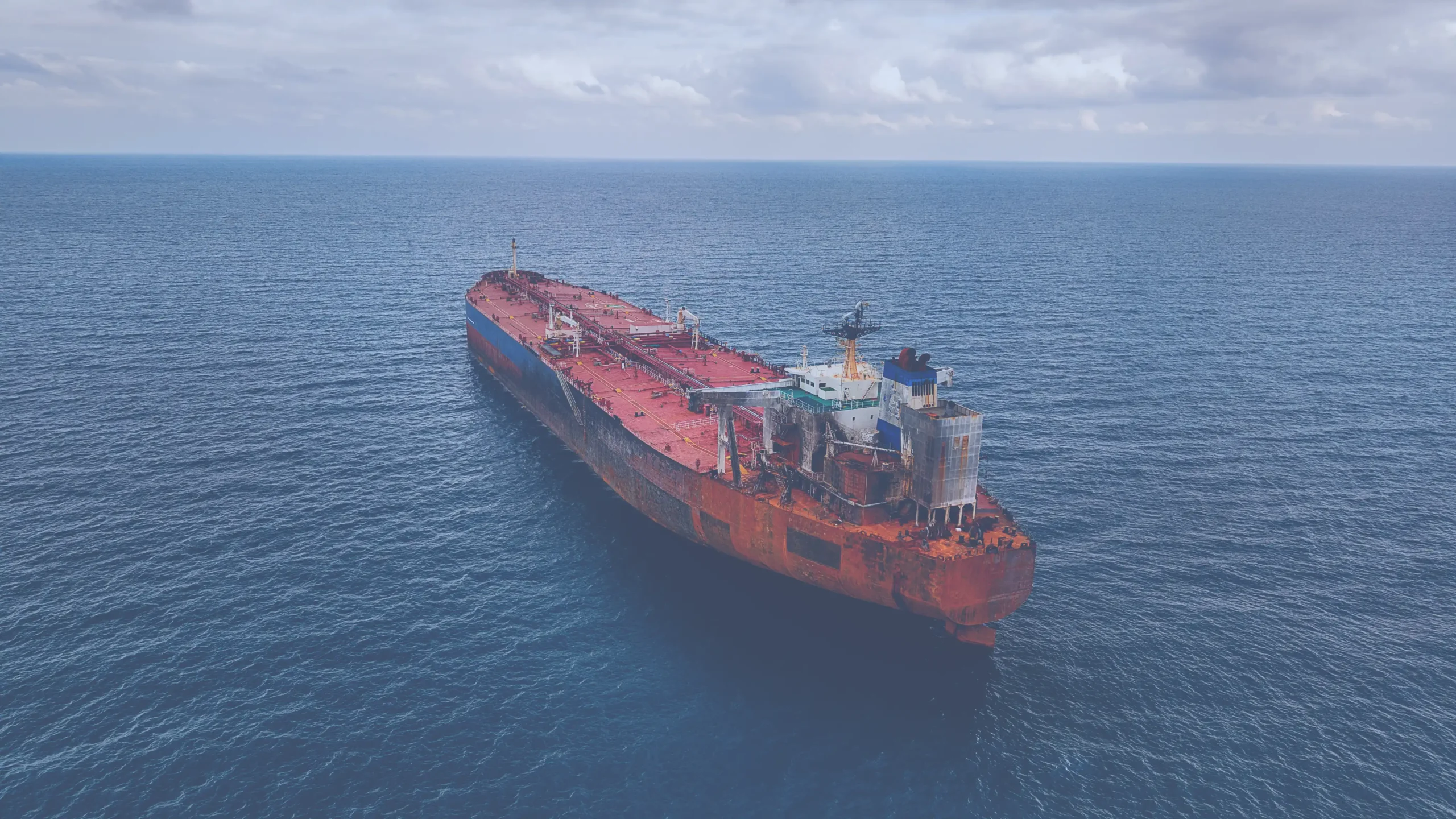
What Is The Shadow Fleet?
The shipping network carrying sanctioned oil around the world.
If you work in any category that touches energy, commodities, or global shipping, you have probably encountered the term "shadow fleet" in recent years without getting a clean definition of what it actually is.
Who is running these ships? Who is using them, what risks do they carry, and what are regulators doing about them?
Defining Shadow Fleet
A shadow fleet, sometimes called a dark fleet, is a collection of vessels that operate outside the mainstream regulatory, insurance, and sanctions compliance framework that governs most of the world's commercial shipping.
The vessels are typically older tankers, often well beyond their normal service life, that have been acquired specifically to move oil from sanctioned or politically sensitive origins. They operate under flags of convenience from jurisdictions with limited oversight, carry minimal or fraudulent insurance, and routinely manipulate or disable their AIS transponders to obscure where they have been and what they have been carrying.
The shadow fleet is a loosely connected ecosystem of shipowners, intermediaries, shell companies, and buyers who have collectively built an alternative market for oil that Western sanctions are designed to close off.
Who is Using Them and Why?
The shadow fleet grew dramatically after February 2022, when Western nations imposed sweeping sanctions on Russian energy exports following the invasion of Ukraine.
The G7 price cap on Russian oil, which prohibits Western shipping, insurance, and finance services from being used on Russian crude sold above $60 per barrel, gave the shadow fleet its clearest mandate. Russia needed a way to keep selling oil. Buyers in India, China, Turkey, and elsewhere needed a way to keep buying it at a discount.
The shadow fleet filled the gap.
Russia is the largest single user, but the fleet also moves oil for Iran and Venezuela, both of which have operated under U.S. sanctions for years, and to a lesser extent for North Korea. Estimates of the fleet's size vary, but credible assessments put the number of vessels at somewhere between 600 and 1,400 tankers, depending on how strictly the category is defined.
That represents approximately 18.5% of global tanker capacity and a meaningful portion of the oil that reaches Asian markets.
How Shadow Fleet Operations Work
The mechanics rely on layering obscurity at every point in the transaction. Vessel ownership is typically buried in chains of shell companies across multiple jurisdictions, making it difficult or impossible to identify the beneficial owner.
Ships operate under flags from countries that do not participate in Western sanctions enforcement, such as Panama, Gabon, or Palau, and re-flag repeatedly. Transponders are switched off during portions of voyages, particularly when ship-to-ship transfers occur at sea to blend cargoes and break the paper trail between origin and buyer. Port call records are incomplete or falsified, and cargo documentation frequently misrepresents the origin of the oil.
Insurance is one of the most significant practical risks. Mainstream tanker insurance from the major Protection and Indemnity clubs, which cover liability for oil spills, crew injuries, and third-party damage, is not available to vessels breaching sanctions.
Shadow fleet vessels are either uninsured, carry fraudulent certificates from obscure providers with no real capacity to pay claims, or use Russian state-backed schemes of uncertain reliability.
Given that many of these ships are well beyond normal retirement age and have not been maintained to Western classification standards, the risk of incident is materially higher than for a compliant fleet.
The Real-World Risks
For procurement and supply chain professionals, shadow fleet exposure can arrive in unexpected places. Organizations that source commodity chemicals, fertilizers, or refined petroleum products without full visibility into their shipping and logistics chain may unknowingly have shadow fleet vessels in their supply network.
In some cases, intermediaries use shadow fleet logistics at one leg of a journey and switch to compliant carriers for another, making due diligence significantly harder.
The environmental risk is frightening. Several aging shadow fleet tankers have run aground or suffered incidents in recent years, and their lack of valid insurance means cleanup costs fall on coastal governments and local economies rather than vessel owners. The Cook Islands tanker grounding off the coast of Malaysia in 2024 and the series of fires involving aging Russian-linked vessels in the Baltic and Black Seas have put regulators on notice that the fleet poses a systemic environmental threat.
The sanctions exposure risk is real for buyers of oil-derived products. If a supplier at any point in your chain used shadow fleet logistics to move Russian oil above the price cap, Western companies that received those products may face regulatory scrutiny under U.S. OFAC rules or EU sanctions regulations, regardless of their intent or awareness.
What's Being Done About It?
Enforcement has been uneven but is intensifying. The U.S. Treasury and the EU have both sanctioned specific vessels and shipowners connected to shadow fleet operations, added insurers and flag registries to sanctions lists, and issued guidance requiring companies to conduct enhanced due diligence on shipping chains.
Several major ports, particularly in Europe, have begun refusing entry to vessels that cannot demonstrate valid insurance or that have gaps in their AIS history.
The G7 has been tightening the price cap enforcement mechanism, including targeting the banks and payment intermediaries that process transactions for sanctioned oil. The EU's latest sanctions packages have specifically targeted shadow fleet logistics providers. The U.S., U.K., India, France and Italy have boarded and seized shadow tankers to enforce international sanctions.
None of this has broken the market. The fleet has proven resilient precisely because its operations are deliberately distributed and opaque. But enforcement is making it harder and more expensive to operate, and buyers who choose to engage with shadow fleet supply chains are taking on escalating compliance and reputational risk.
What procurement teams should be asking:
- Does your shipping and logistics due diligence process require AIS history verification from carriers?
- Do your commodity contracts require suppliers to certify the origin and shipping chain of goods delivered, including the flag state and insurer of any vessel used?
- Are your compliance and legal teams tracking the OFAC and EU designation lists for shadow fleet vessels and operators?
- If you source refined petroleum products, fertilizers, or chemical feedstocks with any exposure to Asian or Middle Eastern intermediaries, has the provenance of the underlying crude been assessed?
📰 In Other News...
Keeping a pulse on the industry.
The Drone Procurement Gap That Military Planners Cannot Ignore
Europe is discovering an uncomfortable truth about modern defense procurement: traditional acquisition models were not designed for hardware with a technological half-life measured in months.
The war in Ukraine has demonstrated that small unmanned systems, from reconnaissance UAVs to attritable strike platforms, are central to frontline operations. Yet European governments are caught between buying early and risking immediate obsolescence, or waiting for better technology and opening a dangerous capability gap.
A Financial Times investigation published in February found that countries like Finland are seeing systems age out of strategic usefulness before they are even fully deployed, as software, communications, and counter-jamming technologies evolve faster than procurement cycles can track.
The U.S. faces a related version of the same problem. Pentagon analysts have argued that while drones have fundamentally altered modern conflict, American procurement processes have been slow to adapt at the scale required. Regulatory headwinds have compounded the issue: FCC moves to restrict certain foreign-manufactured platforms have narrowed the available supplier base at a moment when demand is surging. Private capital is flowing into defense-tech startups at record levels, funding modular and upgradable architectures designed to avoid the obsolescence trap. But drone manufacturers cannot scale factories on venture funding and optimism alone.
The broader lesson for procurement professionals outside defense is the same one that keeps surfacing across categories: where technology is evolving faster than procurement cycles, the traditional approach of locking in specifications and running a long competitive process produces contracts that are outdated before they are executed.
Major Coffee Traders Align on Two Procurement Principles
A group of 14 significant coffee traders and roasters, including JDE Peet's, Louis Dreyfus, Neumann Kaffee Gruppe, Illycaffè, and Sucafina, has reached consensus on two purchasing principles intended to improve long-term farmer viability.
The agreement, published in late March following a nine-month collaboration with sustainability organizations GCP, IDH, and Solidaridad, identifies long-term strategic partnerships and active support for sustainable production as the two changes most likely to improve conditions at farm level.
The backdrop is stark: roughly 12.5 million smallholder farmers produce about 80 percent of the world's coffee while capturing the least value in the chain and absorbing the most risk.
Prior research found that current value distribution heavily favors roasters and retailers over farmers, many of whom do not even factor their own family labor into their cost models. The significance of this agreement is less in its content, which articulates principles most in the industry would endorse in principle, and more in the fact that 14 competing commercial players have formally aligned on common buying behaviors. Whether that translates into measurable farm-level change will depend entirely on execution and accountability mechanisms that have yet to be defined.
Procurement leaders sourcing coffee at scale should expect more supplier questions about long-term contracting, pricing floors, and traceability as these principles move from paper to practice.
🤖 AI Procurement News
Artificial intelligence shaping the industry.
What the Fable 5 Shutdown Tells Us About AI as a Supply Chain Risk
On June 9, 2026, Anthropic released Fable 5, widely assessed as the most capable AI model available to the public.
On June 12, at 5:21 p.m. Eastern Time, the U.S. Commerce Department issued a directive ordering Anthropic to suspend access to Fable 5 and its restricted sibling Mythos 5 for any foreign national, including the company's own non-citizen employees. Within roughly 90 minutes, both models were offline for every user worldwide.
The legal mechanism invoked, the "deemed export" doctrine under federal export control regulations, had never previously been applied to real-time AI inference over a cloud endpoint. Because Anthropic could not verify user citizenship at consumer scale in real time, the only way to comply was to shut off access globally, which is what they did. The models remain suspended as of June 23rd.
What matters for procurement teams is the specific category of risk the Fable 5 incident illustrates. A model that a government can switch off globally in under two hours carries a fundamentally different risk profile from on-premise software or open-source tooling. Any organization that has built production workflows dependent on a single cloud AI provider has a single point of failure that is not just technical in nature. The disruption can be regulatory, geopolitical, or legal, and it can arrive with 90 minutes of notice.
The conditions that produced this incident are not resolved, and the incident itself is unlikely to be the last of its kind.
💫 Resources from Una
- The Indirect Spend Audit: Finding & Arresting Margin Leakage
- The CFO’s Guide to a GPO Partnership
- Critical Minerals and the Periodic Table Wars
- The Responsible AI Gatekeeper: Why Procurement is Our Only Hope (Seriously)
- Making Procurement a Magnet for Purpose-Driven Professionals
- Six Ways You Might be Holding Back Supplier Innovation
- How to Spot Supplier Greenwashing
- Would You (Still) Encourage Your Kids to Pursue a Career in Procurement?
- Four Innovation Hacks for Procurement Teams
- Managing Data Burnout in Procurement
- Episode 239 Featuring Marissa Muzik
- Episode 240 Featuring Justin Dillon
📧 Never Miss an Issue
Subscribe to The Sidekick.
Subscribe to receive The Sidekick in your inbox. New issues are published every month.