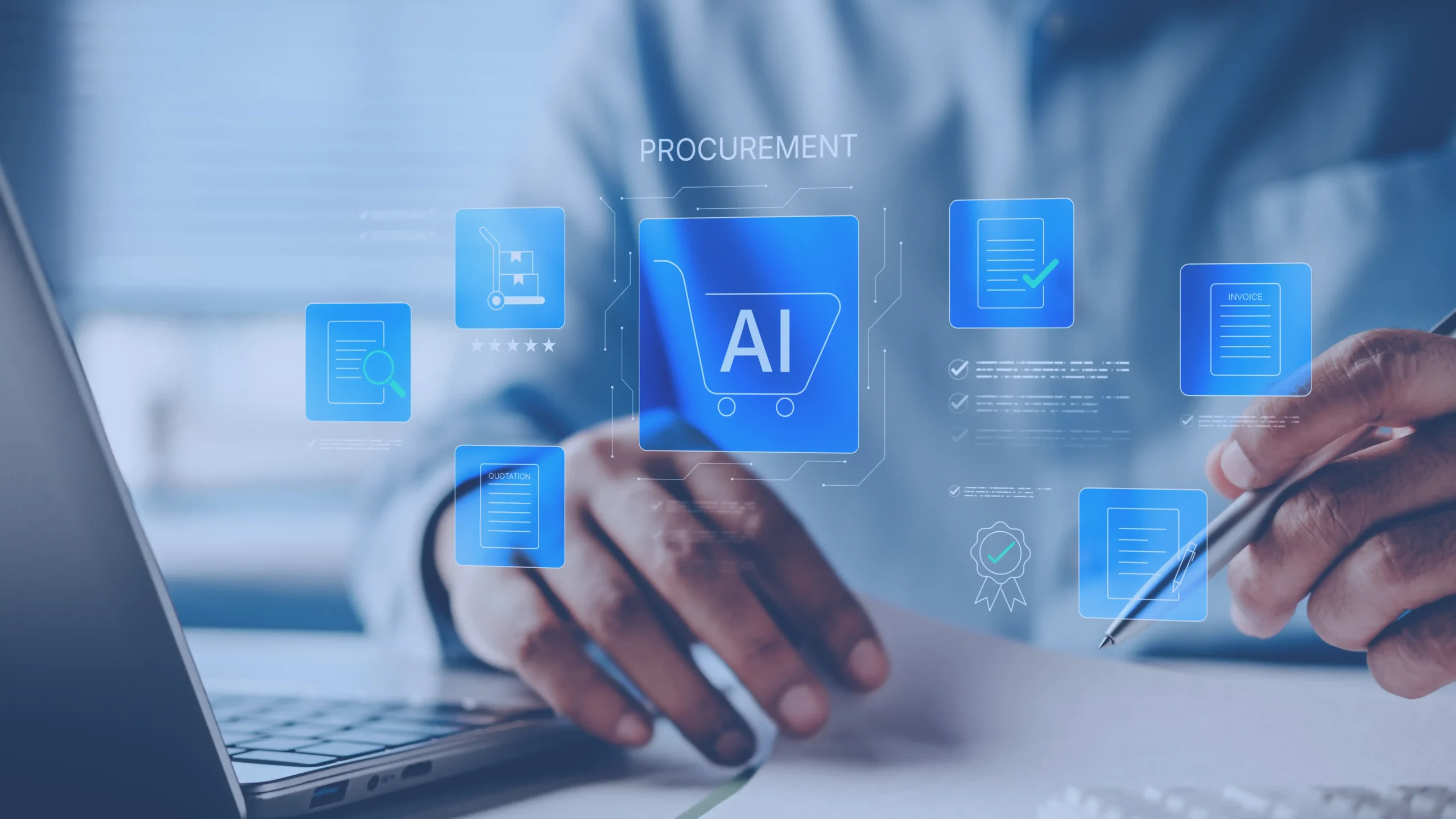
Walk into any procurement conference this year and you'll hear two very different conversations happening about AI. At the leadership level, there's real enthusiasm for what automation could unlock. But down on the sourcing floor, among the people actually processing requisitions and chasing invoices, the mood is closer to concern, and in some cases outright panic about what the technology means for their jobs.
Maybe the rapid encroachment of AI into procurement's traditional workload deserves a different response than the wariness it usually gets from sourcing professionals. After years of talking about strategic potential without ever quite reaching it, procurement finally has a genuine shot at getting there.
AI Automation
Every year brings a new report declaring that procurement is on the verge of a strategic breakthrough, and every year, most procurement teams remain buried in purchase orders, three-way matching, supplier onboarding forms, and contract renewals. The tools around them keep changing, but the workload rarely does.
AI automation could be what finally breaks this cycle, because it targets the exact bottleneck that has kept procurement tactical for so long: time.
The Real Barrier Was Never Talent
Ask any procurement leader what's holding their team back from strategic work, and technology rarely tops the list. They'll talk about headcount and about the sheer volume of transactional tasks that eat up a working week: purchase requisitions need approving, invoices need matching, and suppliers need chasing for compliance documents that were due last month.
None of this requires much strategic thinking, but all of it requires time, and time is the one resource procurement teams have never had enough of.
This is where AI automation earns its place. Tools that can read and route requisitions, flag invoice discrepancies, extract key terms from contracts, and monitor supplier risk signals in real time take on the transactional weight that has kept procurement professionals from doing the work they were actually hired to do.
What Strategic Procurement Could Look Like
Strip away the jargon, and strategic procurement comes down to a handful of activities: category strategy, supplier relationship management, risk mitigation, and value creation beyond unit price.
These activities have always required judgment, negotiation skill, and an understanding of business context that an algorithm can’t (yet) replicate. What they also require is time to think, and that's precisely what automation can hand back.
Picture a category manager who no longer spends Monday morning wrestling with maverick spend, because an AI tool has already flagged the anomalies and grouped them by root cause. That manager now has the hours to build a genuine category strategy, engage stakeholders early, and negotiate from a position of insight rather than urgency.

Or imagine a supplier relationship manager who no longer manually tracks performance scorecards across a dozen disconnected systems, because an AI-enabled platform now consolidates that data automatically. That manager can spend the freed up time on the conversations that genuinely strengthen a supply base, understanding a supplier's constraints, co-developing innovation opportunities, and building the kind of trust that pays off when disruption hits.
This is the shift AI automation makes possible.
Data Quality is the Quiet Prerequisite
None of this works if the underlying data is a mess, and here's where many procurement teams hit their first real obstacle.
AI automation is only as good as the data it's trained on and fed by. If your spend data lives across five disconnected systems, if your supplier records are duplicated and outdated, or if your contract repository is a shared drive full of inconsistently named PDFs, no amount of automation will produce reliable outputs.
Before chasing the latest AI tool, it pays to audit your data foundations first. Clean, centralized, well-tagged data will determine whether everything built on top of it actually works.
Change Management Still Matters
Technology adoption in procurement has a well documented failure pattern, where a promising tool gets purchased, implementation stalls, and the team quietly reverts to spreadsheets within a year.
AI automation is not immune to this pattern. Procurement professionals who have spent years building expertise around manual processes need genuine reasons to trust a new system, rather than a mandate handed down from above. Involve the team early, and let them see automation remove the parts of their job they find most tedious, rather than experiencing it as a threat to their relevance.
The teams that get this right treat AI automation as a tool that amplifies procurement expertise. That framing needs to come from leadership consistently, right from the start of the rollout.
Group Purchasing Organizations Already Show the Model
For procurement teams unsure where to start, group purchasing organizations (GPOs) offer a useful preview of what happens when transactional work is outsourced.
Joining a GPO like Una shifts the burden of sourcing, negotiating, and contracting for indirect categories onto a partner built for that exact purpose. The procurement team retains oversight and strategic control, while the day-to-day mechanics of supplier selection and contract management happen through an established structure.
There’s a close parallel with AI automation here. In both cases, procurement hands off the transactional layer so it can focus on what only an internal team can really do, which is understanding the business, setting category strategy, and managing the relationships that matter most.
Joining a group purchasing organization hands off the operational grind of sourcing for a defined set of categories, usually indirect spend like MRO supplies, office products, logistics, or facilities services, to a partner that already has negotiated contracts in place.
Here's what that actually removes from a procurement team's plate:
- RFP and negotiation cycles. Instead of running a full sourcing event for, say, packaging supplies, the team taps into rates the GPO has already negotiated across its member base. The leverage of pooled volume typically beats what a single company could negotiate alone.
- Supplier vetting and onboarding. GPOs pre-qualify their supplier panels, so the compliance checks, credit reviews, and contract paperwork that normally eat weeks of a category manager's time are already done.
- Ongoing contract administration. Rate changes, renewals, and compliance monitoring for those categories sit with the GPO, not the internal team.
What procurement keeps is oversight. The team still decides which categories go through the GPO, monitors whether the negotiated rates are actually being used across the business, and steps in if service levels slip. That's a strategic function, not a transactional one.
The net effect mirrors what AI automation does for different categories of work: procurement's time gets freed from repetitive, lower-value tasks so it can go toward supplier relationship management, spend strategy across the categories that matter most, and the kind of cross-functional work that a purely transactional team never has bandwidth for.
The Potential Was Always There
Procurement has never lacked strategic potential. What it has lacked is the operating capacity to express that potential consistently, buried as it so often is under transactional demands that never seem to shrink.
AI automation, applied thoughtfully and built on solid data foundations, offers a genuine path past that constraint, a way to finally give procurement expertise the room it needs to breathe.
Ready to incorporate group purchasing and AI automation into your procurement strategy? Contact the Una team to get started.