
The Companies That Are Doubling Down on China
February 26, 2026
Welcome to The Sidekick, a monthly procurement newsletter dedicated to Sourcing Heroes around the country.
Una is a group purchasing organization that helps over 10,000 active members save more money and simplify procurement.
Join us today at www.una.com.
Doubling Down on China
Trade wars, tariffs, and the "Made in America" movement...
Welcome to edition #26 of The Sidekick!
Today, we’re talking about the companies doubling down on China. Despite trade wars, tariff pressure, and the "Made in America" movement, big brands from Apple to AstraZeneca will not shift production out of China. What’s their justification?
Also, you might have seen President Trump’s reaction to the recent agreement between Canada and China. Is Canada really a potential back door for Chinese goods entering the U.S.? Scroll down to find out.
Besides these big stories, scroll down for our usual mixed bag of treats: procurement news, AI updates, and the latest content from Una's resource center.
Subscribe below so you never miss an issue!
Let's get into Issue #026...
Savings in 90 Days or Less
A no-nonsense guide to unlocking indirect spend savings in 90 days with the help of a group purchasing organization.
The Companies Doubling Down on China
Apple, Tesla, Boeing, Walmart and more...
While China-U.S. trade tensions, tariffs, and geopolitical drama keep making headlines, you'd think every big company would be packing up and heading home… or at least somewhere less complicated.
But no, plenty of major U.S. players are sticking with China and even expanding operations there. Why? It's often about the sheer efficiency, scale, and expertise that's hard to replicate elsewhere.
Despite the headaches from U.S.-China trade wars, tariff uncertainties, political pressures, and often-generous incentives to reshore manufacturing back to the States, these firms see China as a key part of their strategy.
Apple
Apple has been synonymous with "Designed in California, Assembled in China" for years, and that's not changing anytime soon. Even with tariffs biting into profits and calls to bring jobs home, the tech giant announced in late 2025 plans to invest another $2 billion in its Chinese supply chain partners.
This comes on the heels of expanding facilities in Zhengzhou, often called "iPhone City."
Tim Cook, Apple's CEO, has been vocal about this, pointing out that China's ability to mobilize massive workforces and specialized suppliers quickly is a game-changer for producing complex devices like iPhones at scale. Despite incentives like the U.S. CHIPS Act offering billions for domestic semiconductor production, China still handles the lion's share.
Cook famously commented that the key reason for sticking with China is the depth and breadth of tooling skills: “[If we had] a meeting of tooling engineers in the U.S., I’m not sure you would fill a room. In China, you could fill multiple football fields.”
Tesla
Elon Musk's electric vehicle empire has turned Shanghai into its global export hub. As of February 2026, Tesla's Gigafactory Shanghai is producing over 1 million vehicles annually, with recent expansions adding battery production lines.
This is despite U.S. political pressure to decouple from China and tariffs on imported EVs that have complicated things.
Like Cook, Musk points to “the sheer quantity of talent” in China as a reason to double down on China, although Tesla is simultaneously ramping up in Texas and Nevada. Musk also argues that China's supply chain dominance over rare earth minerals and components keeps Tesla anchored in China.
Notably, Tesla is seeing a shrinking market in China itself, with rivals such as BYD offering significantly cheaper base models.
Boeing
Boeing has a long-standing but somewhat strained partnership with China. It sources various aircraft parts and components from the country, with over 10,000 Boeing planes operating globally containing Chinese-manufactured parts.
A joint venture operates a 737 MAX completion center in Zhoushan, where Boeing, in partnership with COMAC (the Commercial Aircraft Corp of China), handles painting, interior installation, and final assembly for Chinese customers.
The company’s manufacturing and supply chain footprint in China includes components for multiple Boeing programs, and engine parts accounted for a significant portion of Boeing’s imports from the country in 2025.
More than 1,800 Boeing planes are currently in service with Chinese carriers. Geopolitically, rising trade tensions and tariffs have made the supply chain more complex, with some Chinese airlines pausing new orders and even sending some planes back to the U.S.
Walmart
Historically, Walmart has depended heavily on Chinese suppliers for a large share of its merchandise, but tariff increases have prompted a reassessment of that dependence. The company shifted more of its imports toward India, from 2% in 2018 to 25% in 2023, while Chinese imports declined from 80% to 60%.
In addition, Walmart announced in March 2025 an investment of over $6 billion in Mexico, including the opening of two distribution centers equipped with AI and robotics, a plan expected to create about 5,500 direct jobs and further strengthen its regional supply network.
In short, sourcing from China is down, but when you’re operating at the scale of Walmart, 60% is still a massive amount of goods.
AstraZeneca
Shifting gears to healthcare, AstraZeneca is significantly expanding its sourcing, manufacturing, and R&D footprint in China, despite facing regulatory investigations and geopolitical tensions. In January 2026, the company announced a $15 billion investment in China through 2030 to deepen its operations in the country, which is its second-largest market.
The expansion includes:
- Strengthening the existing network in Wuxi, Taizhou, Qingdao, and Beijing, with plans for new sites to supply both Chinese and international markets.
- R&D and innovation efforts are expanding through increased R&D hubs in Shanghai and Beijing to leverage local scientific talent in areas such as cell therapy and radioconjugates.
- Strategic partnerships have grown since the 2024 acquisition of Gracell Biotechnologies, with collaborations alongside AbelZeta, CSPC, and Harbour BioMed/
- AstraZeneca’s workforce in China is set to exceed 20,000 employees.
Why Doesn't the U.S. Have This Kind of Setup?
It's a fair question: why hasn't America built a comparable manufacturing juggernaut? Neutrally speaking, experts point to a few factors based on economic analyses up to 2026.
China's decades-long focus on industrial policy has created massive clusters of suppliers, specialized tooling, and a workforce trained in high-precision work, often supported by government investments. In the U.S., manufacturing has shifted toward services and tech over the years, leading to gaps in vocational training and infrastructure for large-scale production.
Programs like the CHIPS and Science Act are starting to address this by funding semiconductor fabs and workforce development, but building that ecosystem from scratch takes time, capital, and coordination. It's not about one country being "better" at manufacturing: it's about historical paths and policy priorities shaping different strengths.
All that said, the landscape might be shifting. In a landmark decision in January 2026, the U.S. Supreme Court ruled against key aspects of the Trump-era tariffs on Chinese imports, deeming them overly broad and harmful to American businesses.
This could prompt more CEOs to pause their diversification efforts and reconsider sticking with (or even expanding in) China, as the ruling eases some financial pressures. Time will tell if this tips the scales, but for now, these companies are proving that China's pull remains strong.
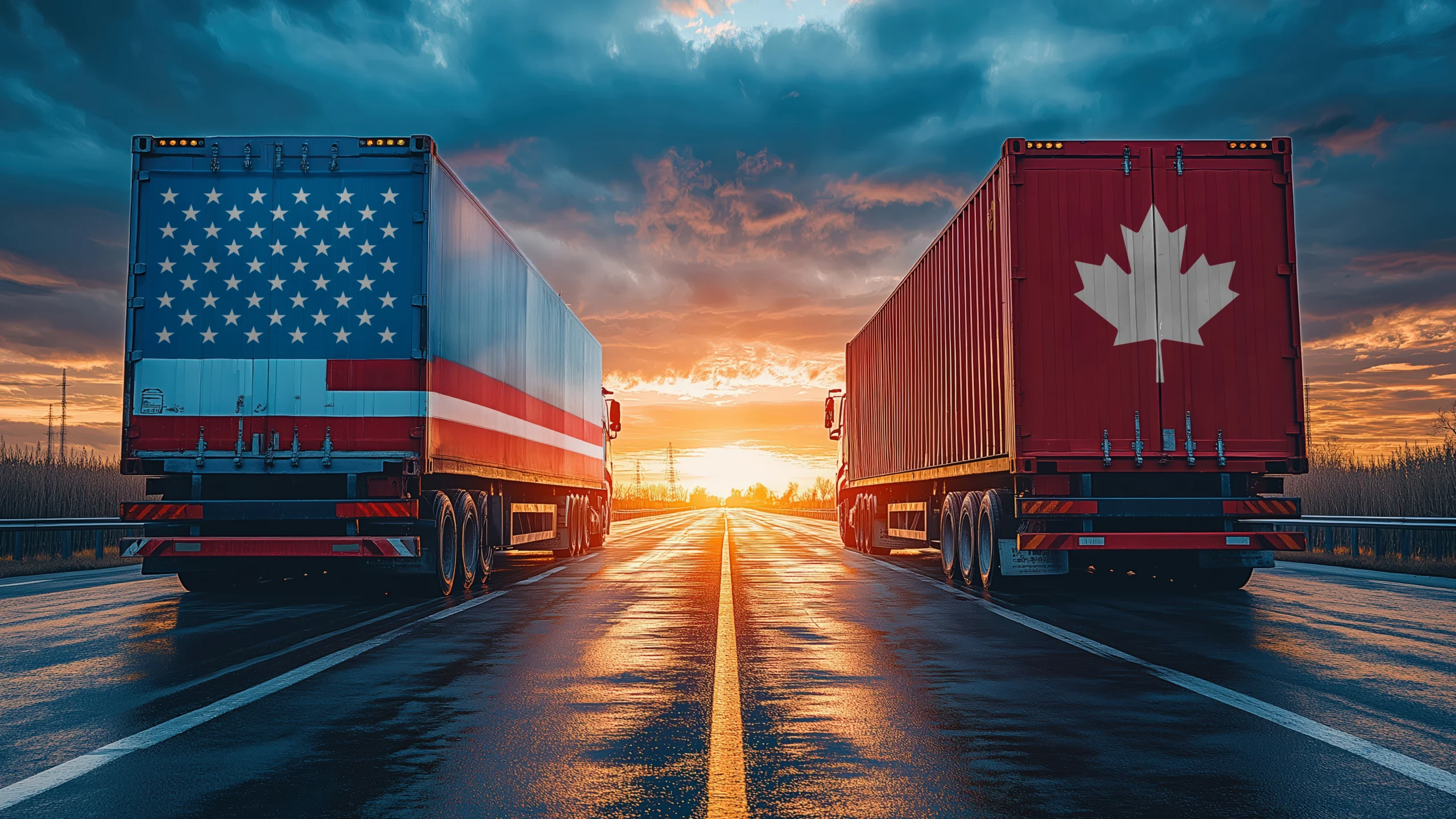
Canada is a “Back Door” into the U.S.
Is it really a gateway for Chinese goods?
The question of whether Canada acts as a gateway for Chinese products into the United States has sparked debate amid the upcoming review of the Canada-U.S.-Mexico Agreement (CUSMA) in July 2026.
U.S. industries allege loopholes allow Chinese goods to enter tariff-free via Canada, while Canadian officials insist on strict safeguards. This concern underpinned the Trump administration’s furious response to the recent Canada-China trade agreement.
U.S. Industries Sound the Alarm
During hearings in 2025, American sectors accused Canadian firms of exploiting CUSMA by incorporating Chinese content.
Luke Meisner of the American Kitchen Cabinet Alliance noted a five-year surge in Canadian imports of Chinese cabinets and materials like plywood, coinciding with increased U.S. exports. "China didn't leave the U.S. market, it just changed the return address," he said, arguing for rules favoring "real manufacturing" over assembly.
Steel and transportation leaders echoed this. Robert Wahlin of Stoughton Trailers highlighted Chinese-owned competitors assembling kits in Canada for U.S. sale, using Chinese labor and materials. Brandon Farris of the Steel Manufacturers Association urged a common tariff regime to prevent North America from becoming a "dumping zone" for cheap Chinese steel. Titanium producer Hank Holland claimed Canadian firms import low-cost Chinese feedstock, undercutting U.S. competitors via CUSMA exemptions.
U.S. Trade Representative Jamieson Greer emphasized tightening rules of origin to ensure benefits stay within North America, not "some third country in Asia."
The Canadians countered that such accusations overstate the issue. Trade policy analyst Eric Miller described Canada as "militant" in preventing Chinese steel trans-shipment, citing a decade of import controls under Prime Minister Mark Carney's government. "Canada knows its U.S. market access is on the line," Miller said.
Complicating matters is Prime Minister Carney's January 2026 Beijing visit, where he forged a partnership on energy, agri-food, and trade. It allows 49,000 Chinese EVs into Canada at 6.1% tariffs (under 3% market share), anticipating joint ventures for jobs and supply chains. China will cut canola tariffs to 15%, remove barriers on other goods, and unlock $3 billion in exports, aiming for 50% growth by 2030. This deal has heightened U.S. fears of indirect Chinese access, with similar concerns expressed over Mexican supply chains.
The evidence is mixed: U.S. anecdotes suggest circumvention in key sectors, but Canada's enforcement record indicates limited abuse. What’s clear is that tariff uncertainty is pushing nations and blocs around the globe to forge trading alliances without the U.S., such as the China-Canada deal and trade agreements between EU-India, EU-Mercosur, and EU-Japan.
📰 In Other News...
Keeping a pulse on the industry.
CIPS warns that the price of consumer goods could surge in 2026 as shipping costs soar and volatility spreads through supply chains. Procurement leaders across 180 countries expect costs for transport and related inputs to push prices higher, with widespread implications for consumers worldwide.
U.S. manufacturers are seeking economic certainty following the Supreme Court’s ruling narrowing the president’s emergency tariff powers, while tariffs under Section 232 remain in place. Industry groups have called for a targeted, predictable tariff framework and warn that policy uncertainty could delay long-term business decisions.
SCOTUS decision could trigger billions in tariff refunds: companies are already scrambling to understand how to claim tariff refunds, but the money is unlikely to be seen for a long time. Bloomberg predicts “a multi-year mess in the courts” as the issue is litigated.
🤖 AI Procurement News
Artificial intelligence shaping the industry.
European procurement organizations are shifting from broad Gen AI experimentation to selective, high-impact use cases under a “selective industrialization” approach, despite widespread awareness of AI’s value and persistent barriers like data quality, skills gaps, and uncertain ROI.
The EFESO Pulse Report finds that while 93% of executives have used Gen AI, only a small minority (about 5%) have achieved widespread adoption, with most organizations in a learning or testing phase and 53% planning new Gen AI projects in 2026, 33% waiting, and 14% not investing.
Procurement could be the key to responsible AI: This Forbes article argues that as AI adoption grows, enterprise governance must shift from reactive risk management to a procurement-led, holistic approach that actively governs AI use by suppliers, employees, and developers. It emphasizes incorporating a “responsible AI for suppliers” framework, with practical steps like supplier inquiries, risk assessments, and code-of-conduct updates to scale safe AI adoption across the enterprise.
Global AI in procurement market size to hit $39.2 billion by 2035: the latest stats from Precedence research revealed the market is forecast to grow from about USD 3.32 billion in 2025 to USD 39.20 billion by 2035, a CAGR of 28.0%, driven by automation, data-driven decision‑making, and supplier risk management, with software and cloud-based deployments leading the adoption. North America dominated in 2025 with roughly 45% of the market, while Asia-Pacific is expected to exhibit the fastest growth through 2035.
💫 Resources from Una
📧 Never Miss an Issue
Subscribe to The Sidekick.
Subscribe to receive The Sidekick in your inbox. New issues are published every month.