

How does procurement stay relevant when AI, like a hungry Pac-Man high on energy pills, continues to gobble up so many elements of our traditional roles? How do we continue to deliver value when cost savings are no longer enough? Will procurement even have a role to fill by 2030?
We explore insights from three leading firms, McKinsey, KPMG, and Procurement Leaders, to answer these questions and see how they envision the future for the profession.
What McKinsey Believes
According to McKinsey's article Where Procurement Is Going Next, the future of procurement presents “a golden opportunity for procurement to shine.”
They argue that the challenges on the horizon will drive teams to evolve: “Today’s procurement teams face multiple, simultaneous demands. They must mitigate the impact of inflation while managing the supply and supplier risks that can damage reputation or threaten business continuity.”
In other words, they advise the profession to:
- move away from outdated strategies
- embrace supplier diversification, and
- elevate risk management.
McKinsey stresses the importance of using digital tools and data-driven decision-making, stating that these approaches will empower procurement professionals to “create holistic solutions that not only optimize the procurement process but also contribute positively to the organization’s bottom line.”
The demand for sustainability is underscored as well, with McKinsey noting that companies adopting sustainable practices will emerge as leaders, enabling them to access low-carbon resources that are becoming increasingly important in today's market.
What about skillsets? McKinsey points out that CPOs are facing significant talent shortages in both traditional skills and the necessary technical abilities to leverage advanced digital technologies. The message is clear: continuous learning and adapting to new tools will be crucial for success (and good for your future employability).
Future procurement experts need to develop “skills in advanced analytics, digital literacy, and insights to enhance decision-making agility” alongside essential soft skills like collaboration and strategic thinking.
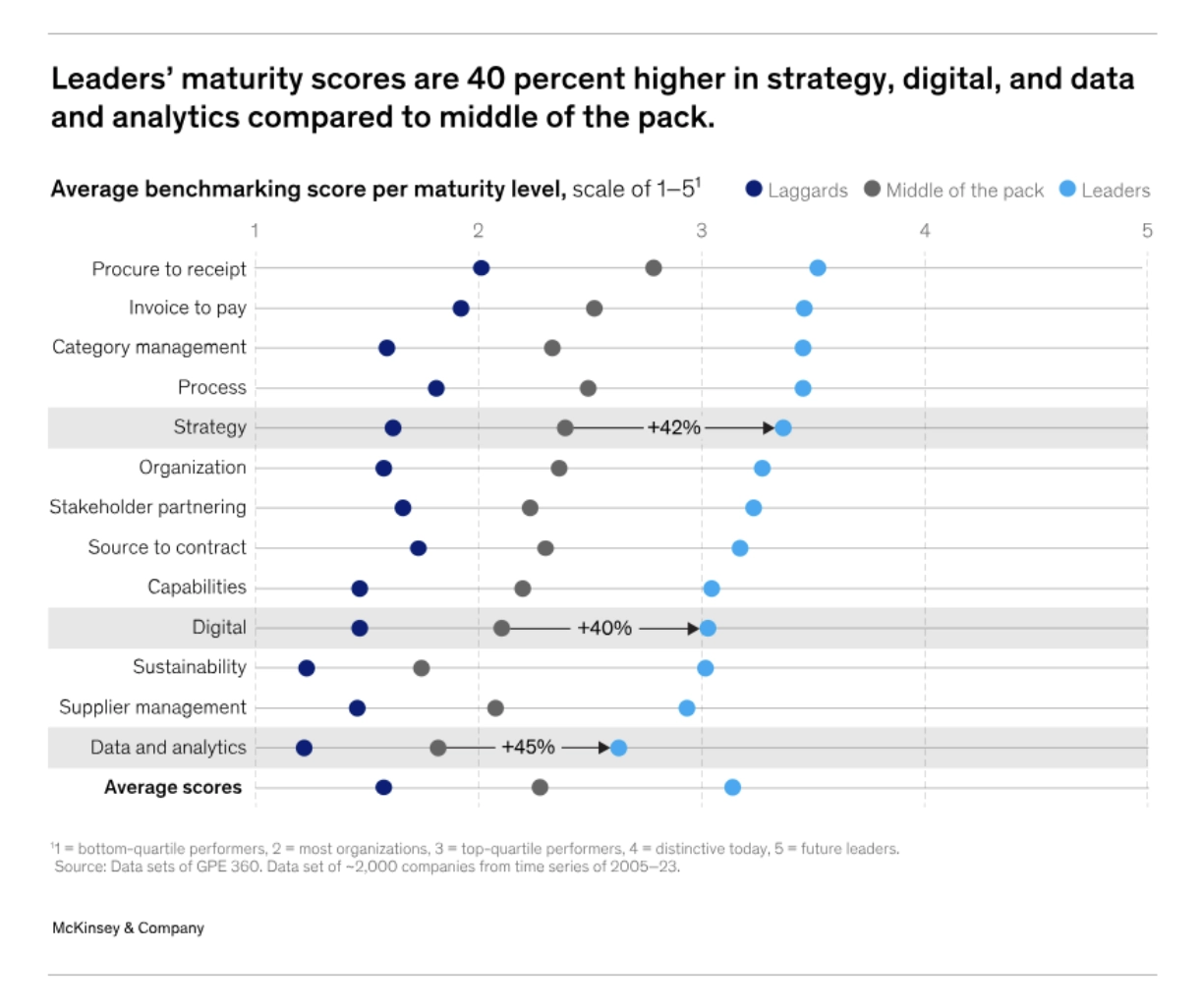
As AI takes over routine tasks, procurement professionals can shift to more strategic roles. McKinsey notes that “high-performing procurement functions excel in many dimensions,” such as procurement strategy, category management, and data analytics, allowing them to drive deeper value.
They encourage teams to leverage AI for market predictions and supply chain optimization, allowing procurement experts to concentrate on building relationships with suppliers and stakeholders.
What KPMG Thinks
KPMG paints a picture of a future where procurement professionals embrace adaptability, collaboration, and specialized skills. The Future of Procurement report explains that “the procurement function is changing rapidly due to a combination of forces, including digital transformation, economic uncertainty, and shifting consumer expectations. As a result, procurement must evolve from its historical focus on cost savings to a broader value-adding role.”
The emphasis on collaboration is particularly important. KPMG notes, “High-performing procurement organizations prioritize collaboration and innovation over traditional cost savings. They build strong relationships with stakeholders and suppliers, focusing on outcomes rather than transactions.” This is about fostering strong partnerships that contribute to meaningful business results, rather than just managing costs.
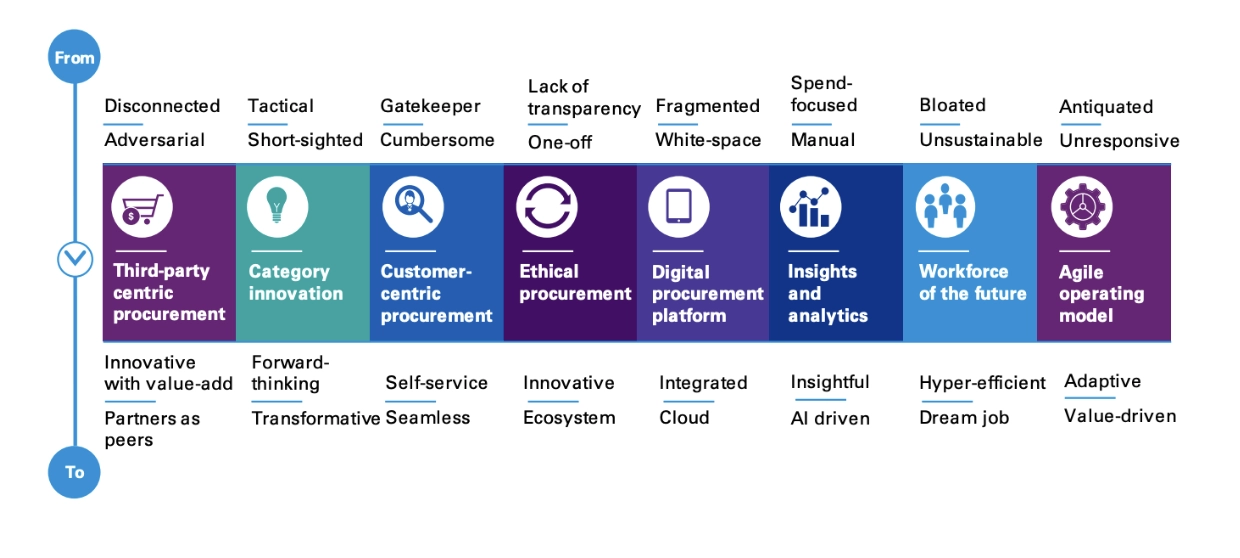
Image: KPMG
KPMG also points out the growing need for specialized skills within procurement. They say, “As procurement evolves, specialized skill sets are becoming more critical. Companies need procurement professionals with expertise in areas such as data analytics, risk management, and sustainability.”
Tech, predictably, will play a big role in this transformation. KPMG emphasizes, “Digital tools can enhance decision-making and improve procurement efficiency. By embracing technology, procurement functions can become more agile and responsive to changing market demands.”
KPMG uses a term that perfectly sums up the existential concern shared by procurement professionals everywhere (or, at least those who are not ignoring the advance of AI): disintermediation.
This essentially means “cutting out the middle player”. Why should a stakeholder need a procurement specialist to help them make a purchase when AI is there to guide them?
Sustainability is another key focus for the future of procurement, and KPMG makes this clear. They point out that “the procurement function is uniquely positioned to drive sustainability initiatives within organizations. By prioritizing sustainable procurement practices, companies can enhance their brand reputation and meet the growing demands for environmentally responsible operations.”
What Procurement Leaders Predicts
In their article: Fewer Buyers, More Specialists: The Procurement Team of the Future, Procurement Leaders points out that the demands on procurement teams are evolving quickly, driven by market shifts, technological advancements, and organizational needs. Procurement can't just sit back and hope for the best; it has to change and adapt to stay relevant.
The key message? Specialize.
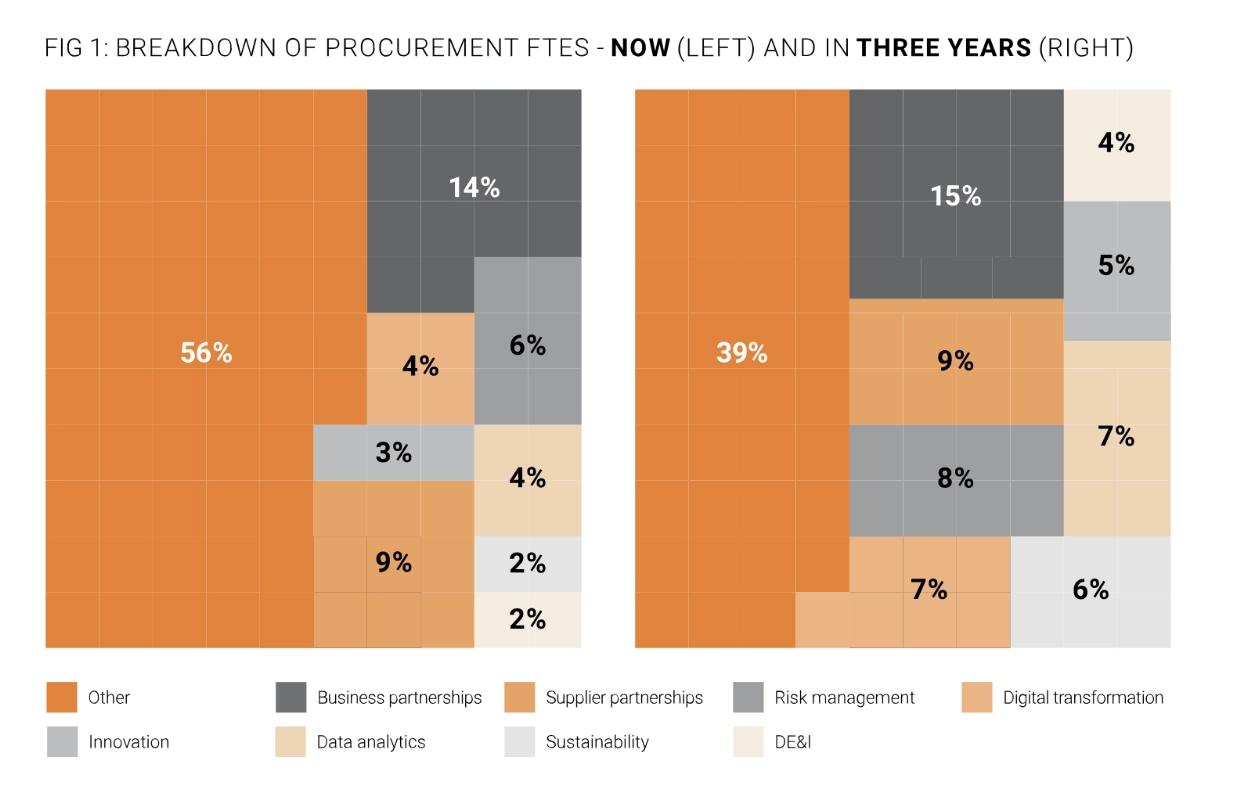
Image: Procurement Leaders
As organizations dive into digital transformation, procurement's focus has to shift from simple transactions to creating real value. They emphasize that “future procurement teams will be increasingly focused on building relationships with both suppliers and internal stakeholders to drive innovation and enhance business performance.” Strong relationships are now at the heart of effective procurement.
Why are specialized skills becoming more important? Procurement Leaders says, “As roles become more specialized, there will be a growing demand for professionals who possess expertise in areas such as risk management, sustainability, and data analytics.” If you're looking to thrive in the future, investing in these skills will be essential… as will being more strategic.
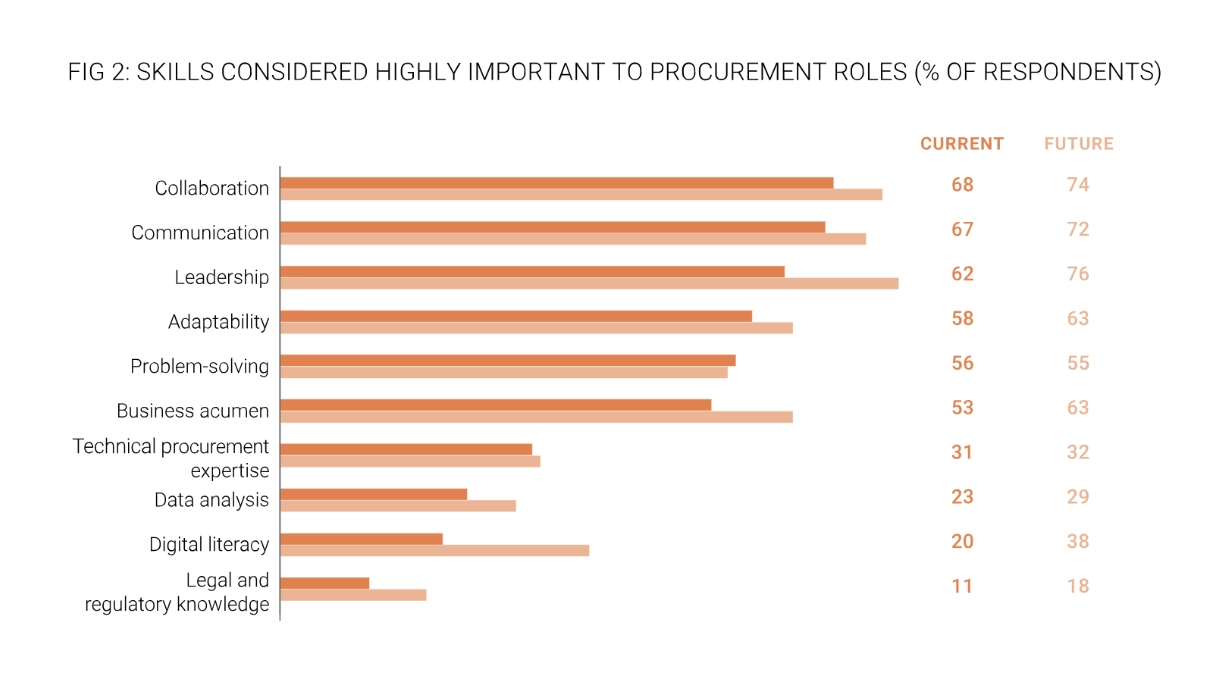
Image: Procurement Leaders
Procurement teams need to integrate themselves more deeply into overall company strategies. “To thrive, procurement needs to become more integrated into enterprise decision-making processes, contributing to broader strategies rather than merely executing transactions.”
Technology plays a huge role in this shift. Procurement Leaders notes, “Digital technologies can empower procurement teams to become more efficient, enabling them to focus on higher-value tasks instead of manual and repetitive processes.”
In summary: Adapt, Collaborate, and Specialize.
Redefine Your Value
Right now, procurement professionals have the chance to redefine their value. But we need to get proactive and embrace the coming shift in roles and responsibilities to ensure continued relevance.
Looking ahead, procurement professionals will increasingly become orchestrators within a highly interconnected ecosystem, harnessing technology to enhance decision-making and drive efficiencies. We’ll increasingly use sophisticated AI tools to analyze data, predict market trends, and automate routine tasks, freeing time for more strategic initiatives.
One way procurement can prove its worth in the future is through partnerships with value-adding organizations like group Ppurchasing organizations (GPOs) like Una. Group purchasing organizations leverage the collective buying power of their members to obtain volume discounts from suppliers and retailers.
When you join a GPO, your collective buying power increases, which means you join forces with a group of consumers to leverage the GPO’s size in exchange for discounts.
The best GPOs will have strong relationships with the world’s top suppliers. Una has spent years developing partnerships with high-performing, culture-driven suppliers that are typically out of reach for most businesses. We happily serve as the gatekeeper, connecting our members to the best enterprise-level contracts available.
Membership with Una is always free. Once you’re signed up, you have access to all of our supplier contracts and business savings can be achieved, fast. Join us today.


